Trumpeter Swans in Ontario
Originally native to Ontario, the Trumpeter Swans were considered an extirpated species in Canada over 200 years ago. With help, they are now a growing population.
Thanks to the many organizations that reintroduced the Trumpeter Swans in Ontario, including Wye Marsh Wildlife Centre, the Trumpeter Swan population in Ontario is now sustainable and no longer relies on rehabilitation facilities.
 Report a Trumpeter Swan Sighting
Tracking the health and movements of the Trumpeter Swans is very important to the restoration program.
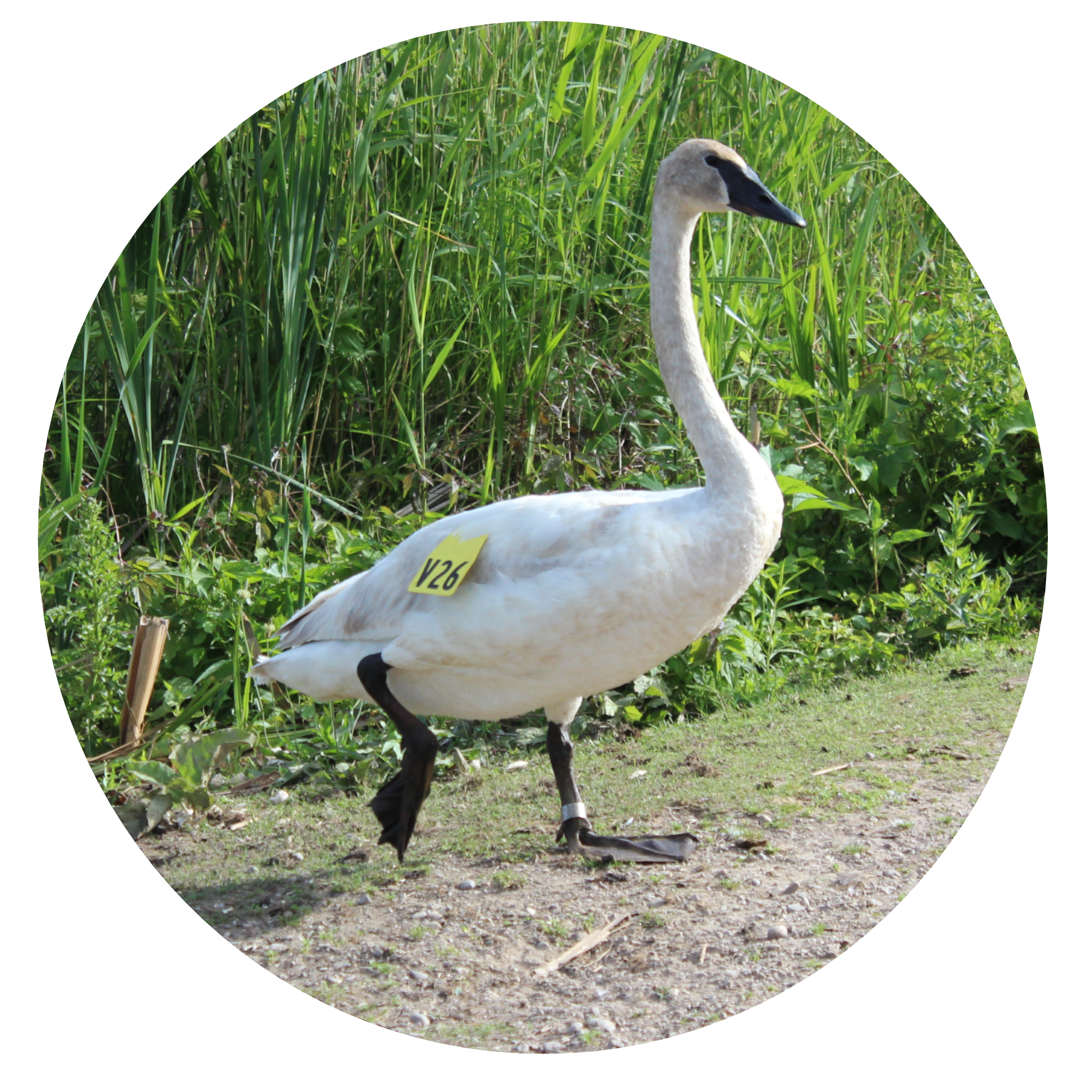
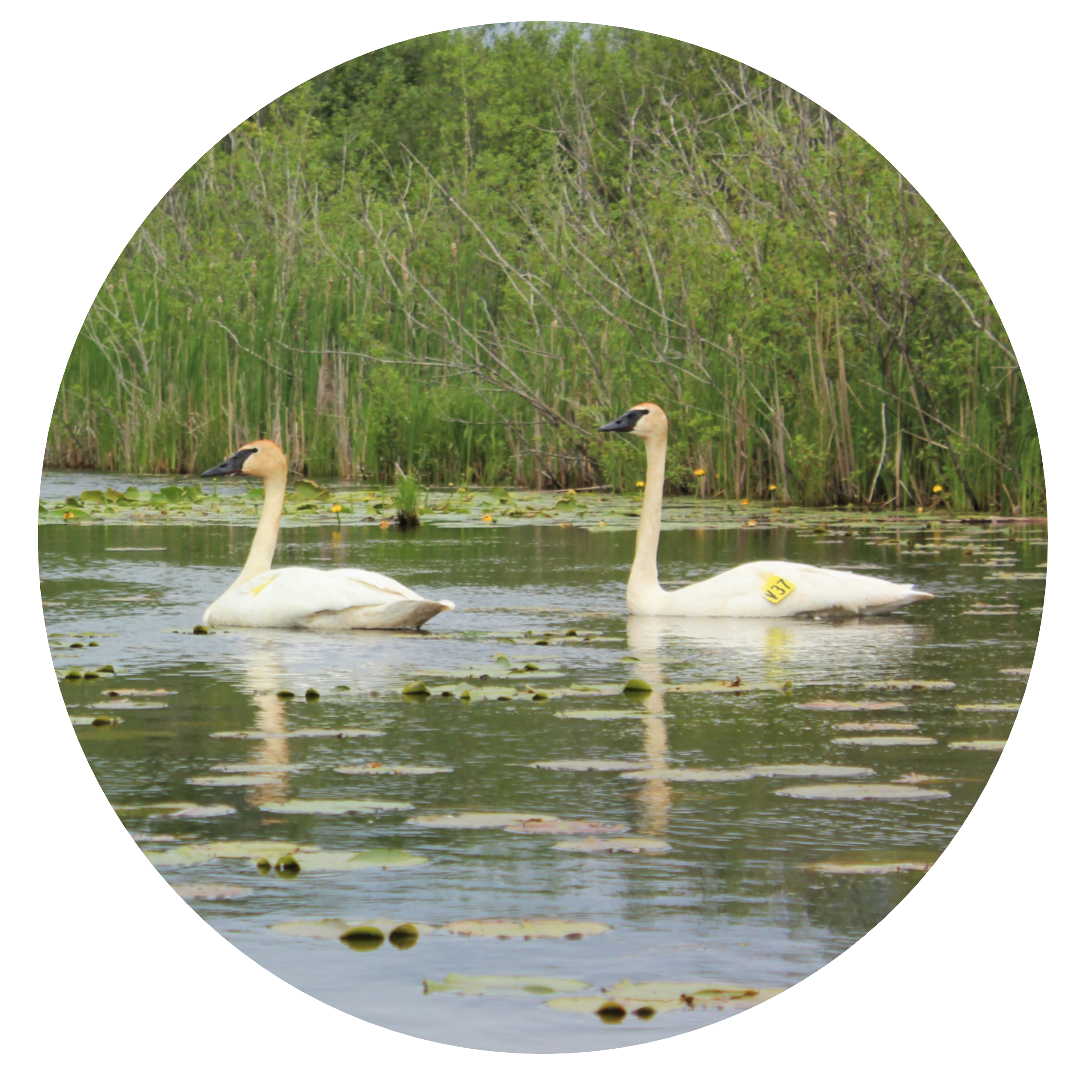
Many of the Trumpeter Swans in Ontario are leg-banded with a metal band and identified with large plastic yellow wing-tags with a three-digit code on it.
 Swans 101
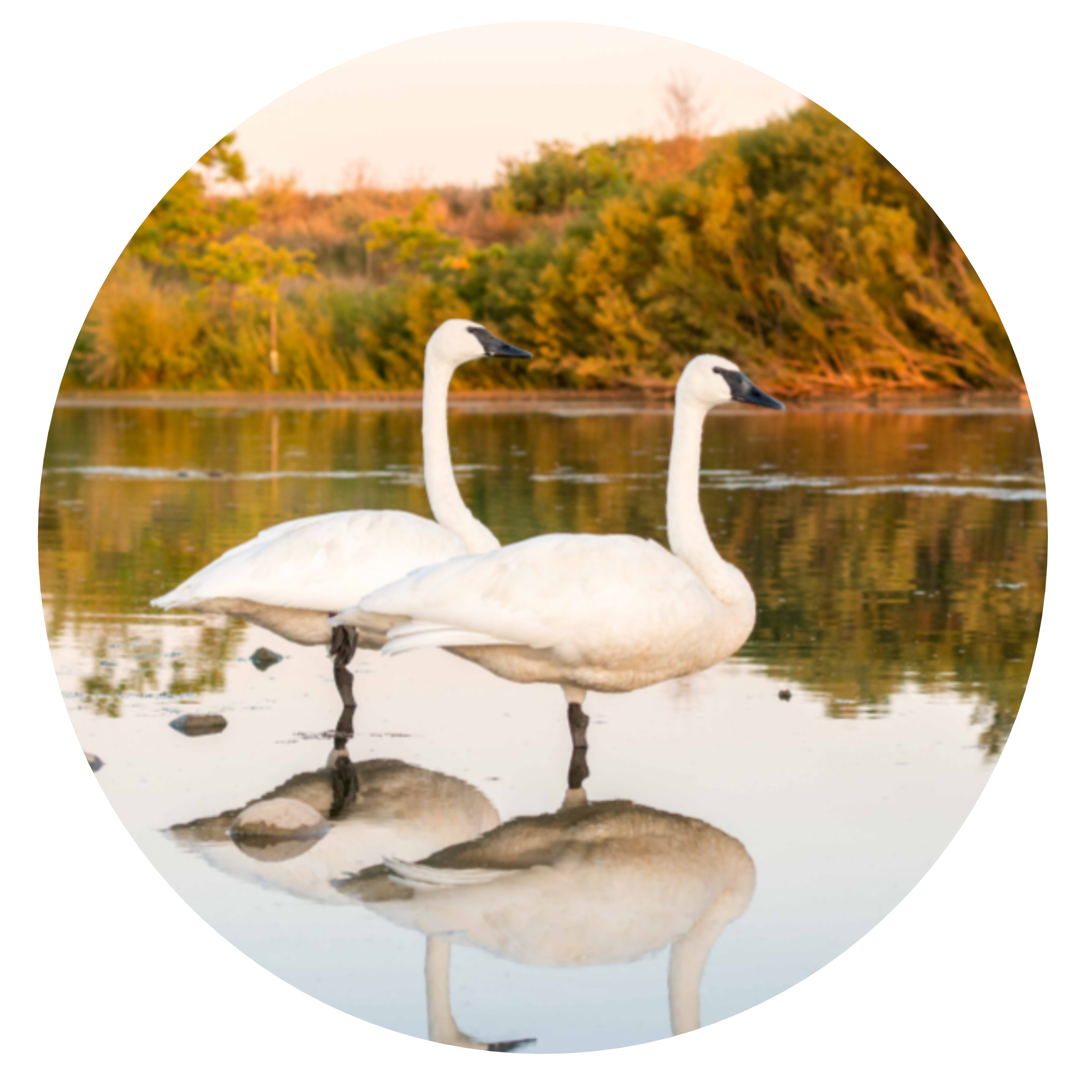
- All swans form strong pair bonds, having the tendency to mate for life, but new pairing can occur.
- Male swans are called cobs, female swans are pens, and juvenile swans are cygnets.
- Trumpeter cobs (9-14 kg) are generally larger than pens (9-12 kg) but show no difference in colouration to help distinguish a male from female.
- Lead poisoning from ingested fishing tackle or spent shot, power line collision and human encounters remain the leading causes of adult swan death.
 A History of Conservation
Originally native to Ontario, the Trumpeter Swan's extirpation from eastern Canada over 200 years ago was primarily due to hunting pressure and habitat loss.
Biologist Harry Lumsden began a provincial reintroduction program in the early 1980's to re-establish the Trumpeter swan in its former habitat and range.
With prime wetland habitat, and archaeological evidence confirming the historical presence of Trumpeters in the Wye Valley, Wye Marsh Nature Centre became a co-operator in the restoration of this magnificent species in 1989. The original captive breeding pair of Trumpeters at Wye Marsh were "Big Guy" and "Lady Girl", who successfully raised the first cygnet in 1990, "Pig Pen". In 1993, Pig Pen and her mate became the first wild nesting pair of Trumpeters in Wye Marsh in over 200 years.
 How You Can Help
There are a number of ways you can help Trumpeter Swans:
- Support wetland conservation and research
- Consider volunteering at a wildlife rehabilitation centre, including at Wye Marsh as part of the Trumpeter Swan Monitoring Program which helps record Trumpeter Swan sightings at Wye marsh. For more information on this program, please email info@wyemarsh.com
- Report sightings to monitoring organizations such as the Wye Marsh Wildlife Centre
- Symbolically adopt a Trumpeter Swan to financially aid in their population monitoring and conservation. You can adopt a Trumpeter Swan at Wye Marsh by clicking here
 When is the best time to view Trumpeter Swans at Wye Marsh?
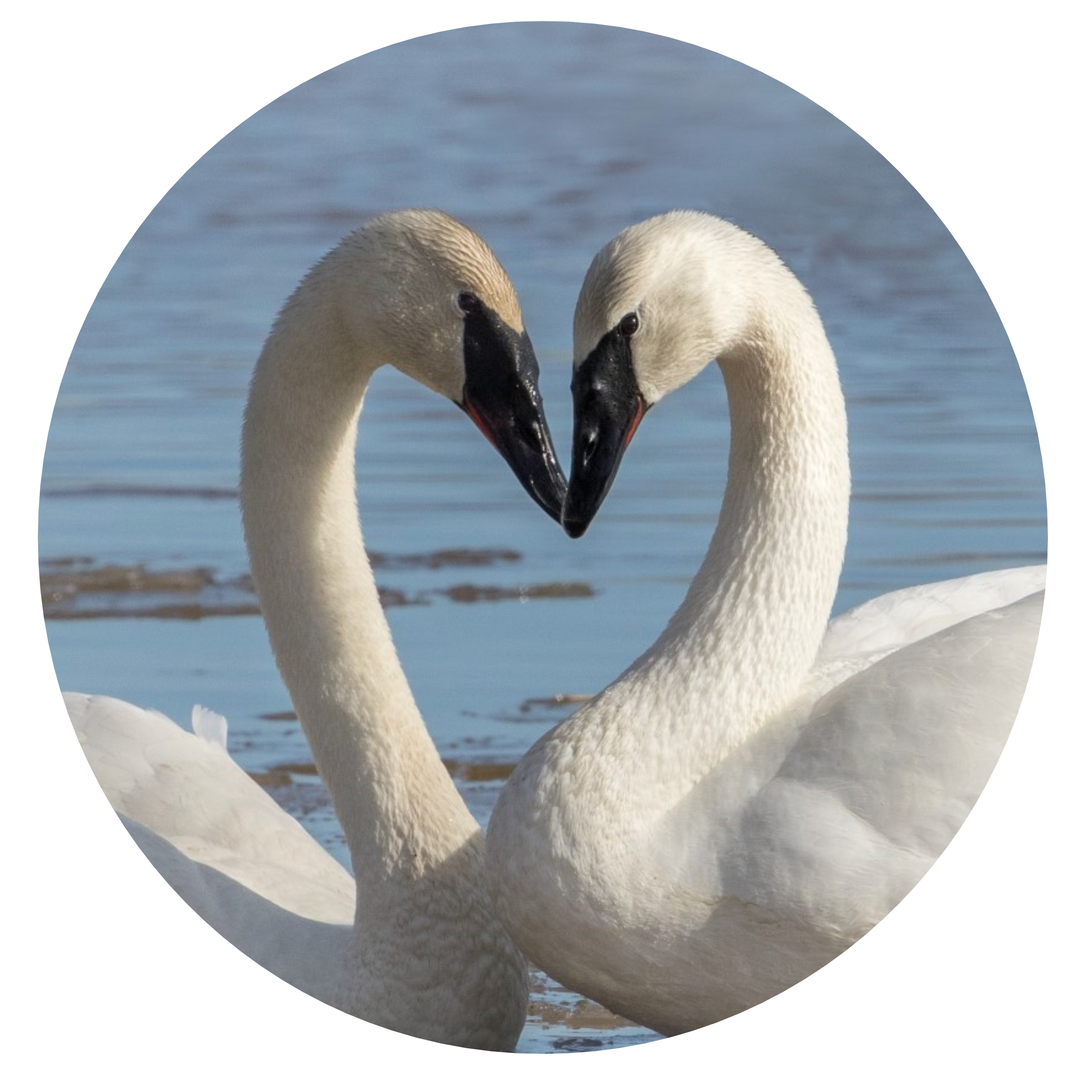
Trumpeter Swans can be found at Wye Marsh all year long. One of the most exiciting times to view them is in the winter months when the ice has formed on most waterways. This offers the public the unique opportunity to view these majestic wild birds up-close demonstrating natural behaviours, peaceful moments and their cacophony of trumpets.
In spring - early summer most swans are together in pairs building a nest and hatching cygnets. In late summer - fall Trumpeter Swan families are out in the more protected areas of the marsh raising their cygnets. While you may see some Trumpeter Swans, these sightings are more infrequent.
In the winter single swans that are ready to mate pair up with perspective partners and existing families show off their bonds by head bobbing and honking together. All around, winter is a social time for swans and as a result Wye Marsh can have up to 50 swans at Swan Landing . Wye Marsh maintains an area of water open as Trumpeter Swans have sufficent insulation to survive a Canadian winter as long as they are able to find open water for eating drinking and bathing.
 We Couldn't Have Done It Alone...
Wye Marsh Wildlife Centre relies on financial contributions from individuals and organizations to be able to continue this important work, and the donation of time by dedicated volunteers. We would like to thank everyone for reporting their sightings, their donations, and the time that they have volunteered to aid in the conservation and restoration of the Trumpeter Swans. We are honoured to be a part of efforts that have successfully restored an incredible species. This exciting milestone would not have been possible without the help and dedication of the many volunteers and supporters of this program. Thank you.
For Further Reading
- Georgian Bay Today: Triumph of the Majestic Trumpeter
- One Swan Can Make a Difference - The Story of Pig Pen
- About Angel Wing Syndrome
- Burlington Gazette: Swans are getting looked after - there are now a reported 1000 of them in Ontario
- Lake Simcoe Living: Trumpeting Swans & Harry Lumsden
- Trumpeter Swans in the Kenora District of Ontario
- Overview of the Trumpeter Swan Reintroduction Program in Ontario, 1982 - 2000
- CBC: A great honking joy! How the majestic trumpeter swan was rescued from extinction
- Muskoka Region.com: Pig Pen the First of Many Swans
 Our Supporters: